

Recently someone came to me with a question: “Zen teachings are so simple, even ordinary. Why is it difficult for people to trust ordinary experience as a path to awakening?”
Even in this question, we can see how we malign the word “ordinary.” By our common understanding, it means mundane, dull, uninteresting, uninspiring, and boring. As boring as your everyday life.
Not at all special.
We don’t come to a spiritual practice to be our ordinary selves, do we? To have an ordinary life? Aren’t we looking to get more than that? To have a special experience or an insight? To know something? And if we don’t get any of that, well, we give up and go looking somewhere else.
It is truly hard to trust what we already are.
But do you really know what you are? To see that, you’ll have to stop picking, choosing, judging, and damning yourself. To see beyond, you’ll have to sit down and be quiet for awhile.
Zen retreats are based on the ancient and ordinary routines of monastic life.
We rise at dawn, meditate throughout the day, eat meals in meditative silence, do various household chores, take afternoon rest, and fall into bed each night, usually exhausted.
It can seem exotic or extreme, the very opposite of ordinary.
But each aspect of a retreat mirrors the activities that comprise your everyday life: waking, working, eating, and sleeping. One day you might realize that your life is already a spiritual practice.
Then you’ll be like the ancestors who reveled in the miracle of being what you are: absolutely ordinary.
Learn about my next retreat Oct. 8-11 near Rochester NY
Listen to a full dharma talk on being absolutely ordinary.
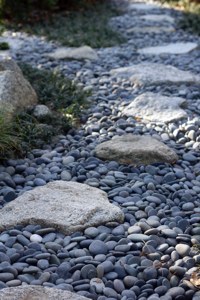
Photo by Mick Haupt on Unsplash
As a practitioner of Christian contemplative tradition, this reflects to me the genius of what my tradition calls “Ordinary Time,” between Epiphany and Lent, and again between Pentecost and Advent. “Ordinary” refers not to mundaneness but to counted, or “ordered,” days—one follows the next in a settled order. The liturgical color is green, for life and earth. To me, it aligns precisely with what you describe. The absence of commemorative days allows me to focus on what is here, now, and simple—what can easily be overlooked when there are set-aside things to consider. I’m always humbled to realize how contemplative orientations in all the world’s spiritual traditions end up in the same place, as if we have many wells, but all draw from the same aquifer.
Comment by Jo Ann — August 5, 2026 @ 1:28 pm
A beautiful truth, thank you.
Comment by Karen Maezen Miller — August 7, 2026 @ 12:08 pm
I watched the movie A Hidden Life by Terence Malick last week. A beautiful movie. The title comes from a quote from Middlemarch by George Eliot:
“… for the growing good of the world is partly dependent on unhistoric acts; and that things are not so ill with you and me as they might have been, is half owing to the number who lived faithfully a hidden life, and rest in unvisited tombs.”
Ordinary people can be quite heroic!
Comment by Simone — August 6, 2026 @ 12:37 am
We might say a “hidden life” is entirely a life of faith; there are no plaudits, no prizes, no notice, no fame.
Comment by Karen Maezen Miller — August 7, 2026 @ 12:17 pm